When your Shopify store processes 2,000 orders on a Tuesday and 12,000 the day after a product launch, your support inbox doesn’t scale linearly-it explodes. Contact volume in eCommerce isn’t predictable, it’s elastic, seasonal, and driven by external forces you can’t control. Building a permanent in-house team sized for Black Friday means you’re overstaffed 10 months of the year. This is the structural problem that makes eCommerce customer service outsourcing different from standard BPO-and why most DTC brands with serious volume eventually evaluate it.
At a glance – eCommerce customer service outsourcing in 2026:
- WISMO and returns are the safest first outsource – high volume, low complexity, process-driven
- Hybrid model (dedicated core + overflow) solves the seasonal spike problem for most DTC brands
- South Africa delivers 60-70% cost savings vs US/UK with neutral-accent English and full UK time zone overlap
- True cost includes agent rate, tooling licences ($50-$150/agent/month), and team lead overhead
- FCR (First Contact Resolution) is the primary metric – target 75-85% for eCommerce
- Plan seasonal ramp at least 6 weeks ahead – quality BPOs cannot deploy 30 agents in 2 weeks
This guide walks through the three outsourcing models that work for online retail, the query types you should (and shouldn’t) hand off first, the real cost drivers beyond hourly rates, and the quality controls that separate good eCommerce BPO from ticket-processing factories.

Why eCommerce Customer Service Is Different From Standard BPO Support
eCommerce support operates under four constraints that standard BPO models weren’t built for: seasonal spikes of 3-5× baseline volume are structurally normal, 60-70% of contacts are repetitive but high-stakes queries like WISMO and returns, agents need simultaneous access to Shopify, Amazon Seller Central, and third-party logistics systems, and every negative interaction becomes a public review that damages conversion rates.
Standard BPO was designed for insurance claims, telecom billing, or credit card servicing-industries with predictable daily volume and contained brand exposure. eCommerce doesn’t work that way.
Volume Elasticity: The Seasonal Problem
In traditional industries, a 20% month-over-month volume swing is an anomaly. In eCommerce, it’s Tuesday. According to Ringly’s 2026 eCommerce Shipping Statistics, WISMO queries alone account for 30-40% of all eCommerce support tickets, jumping to 50% or higher during peak seasons like Black Friday and the holidays.
That means if your baseline is 500 contacts per day in February, you’re looking at 1,500-2,500 per day in November. Standard BPO headcount models-built around fixed monthly seat commitments-force you to either overpay for unused capacity or scramble for emergency overflow when volume spikes hit.
Query Composition: Repetitive But Brand-Critical
Most eCommerce contacts fall into a narrow set of categories:
- WISMO (Where is my order?): 30-40% of volume baseline, 50%+ during peak periods
- Returns, refunds, and exchanges: Another 20-30% depending on your product category and return policy
- Product questions: “Will this fit?” “Is this compatible with X?” “What’s the material?”
- Payment and checkout issues: Failed transactions, discount codes, duplicate charges
The repetition is real. But unlike standard BPO scenarios where a billing inquiry is purely transactional, eCommerce queries carry brand voice risk. A poorly handled return request doesn’t just cost you the sale-it costs you the Trustpilot rating, the Amazon review, and the Instagram story about your “terrible customer service.”
Marketplace Complexity: Multi-Platform Operations
DTC brands don’t just run on Shopify anymore. You’re juggling:
- Shopify or WooCommerce for your primary storefront
- Amazon Seller Central for marketplace sales
- Third-party logistics (3PL) providers with their own tracking portals
- Carrier APIs from USPS, FedEx, UPS, or regional couriers
- Returns platforms like Loop Returns or Returnly
An agent answering “Where’s my order?” needs to check three systems, interpret carrier scan events, and know whether the customer ordered through your site or Amazon. That’s not generic BPO work-it’s operations knowledge, and it requires training depth that most shared-pool BPO models don’t provide.
Public Exposure: Quality Is Brand-Critical
In B2B SaaS or insurance, a bad support experience stays private. In eCommerce, it becomes a one-star Amazon review, a Reddit complaint thread, or a TikTok with 40,000 views. According to Salesforce’s research on WISMO inquiries, each WISMO ticket costs $5-15 in agent time and overhead, but the brand damage from mishandling them is exponentially higher.
Your BPO partner isn’t just processing tickets-they’re representing your brand in the most friction-heavy moments of the customer journey. That changes the QA requirements entirely.
The Three Support Models for eCommerce Outsourcing
The three models that work for eCommerce BPO are dedicated teams (fixed headcount, maximum control), shared/flex pools (lower baseline cost, less consistency), and hybrid structures (dedicated core with overflow capacity). Most mid-scale DTC brands land on hybrid because it solves the seasonality problem without forcing you to overpay year-round.
Let’s break down each one and when they make sense.
Dedicated Team Model: Maximum Control, Higher Cost
A dedicated team means a fixed group of agents works exclusively on your account. They’re trained on your product catalogue, your tone of voice, your return policy, and your edge cases. Over time, they build tribal knowledge-they know that SKU #4782 always generates sizing questions, or that your Black Friday promo code logic confuses customers every year.
Best fit for:
- Brands with consistent daily volume (500+ contacts/day year-round)
- Strong brand voice requirements (luxury, wellness, or lifestyle brands where tone matters)
- Complex product catalogues requiring deep product knowledge
- Regulated categories (supplements, cosmetics, baby products) where compliance errors are costly
Cost structure: Higher baseline monthly commitment, typically structured as a per-seat model. Expect $1,500-$2,500 per agent per month depending on location (more on this in the cost section).
Trade-off: You’re paying for capacity even during slow months, but you’re getting consistency, lower training costs, and better FCR (First Contact Resolution) rates.
Shared/Flex Model: Lower Baseline, Shallower Knowledge
A shared or flex model means agents handle multiple client accounts. Your brand is one of several in their queue. Training is lighter, tribal knowledge is minimal, and agent familiarity with your specific SKUs or policies is surface-level.
Best fit for:
- Lower-volume brands (under 300 contacts/day)
- Non-peak periods when you need baseline coverage but don’t want to carry full headcount
- Commodity products with simple return policies and low product complexity
- Brands where speed matters more than brand voice nuance
Cost structure: Lower per-hour or per-contact rates. You’re sharing the overhead with other clients, so the BPO can offer lower pricing.
Trade-off: Expect higher repeat contact rates, longer handle times, and less consistency. You’re optimizing for cost, not quality.
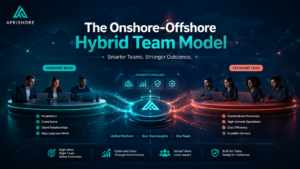
Hybrid Model: Dedicated Core + Overflow Capacity
The hybrid model is where most mid-scale DTC brands land. You maintain a dedicated core team (say, 15 agents) who handle 80% of your volume year-round. When Black Friday hits, the BPO activates a shared overflow pool trained on your basics (WISMO, simple returns) to absorb the spike.
Best fit for:
- Most DTC brands with 500K-5M orders per year
- Seasonal businesses (back-to-school, holidays, Mother’s Day)
- Brands that need quality consistency but can’t afford to pay for 50 agents in February
Cost structure: Blended model-fixed cost for the dedicated core, variable cost for overflow capacity. Requires a BPO with the operational infrastructure to run both pools without quality degradation.
Trade-off: You need to plan your overflow ramp 4-6 weeks in advance. The BPO can’t spin up 30 agents overnight.
What Query Types to Outsource First-and What to Keep In-House
WISMO and returns are the safest first outsource because they’re high-volume, process-driven, and low-risk. Chargebacks, payment disputes, and brand-critical escalations should stay in-house until you’ve proven the BPO can handle complexity without creating financial or reputational risk.

Here’s the priority order:
WISMO (Where Is My Order?): Highest Volume, Lowest Complexity
This is the textbook first outsource. WISMO queries are:
- Repetitive: The customer wants one thing-tracking info
- Data-driven: The answer lives in your OMS, carrier API, or 3PL portal
- High-volume: 30-40% of your ticket volume according to Ringly’s 2026 data
Requirements for successful outsourcing:
- API access to all carrier tracking systems
- Clear SLA for response time (2-hour target is standard)
- Decision tree for common carrier exceptions (weather delays, missing scans, failed delivery attempts)
Red flag: If your BPO partner can’t integrate directly with your OMS or 3PL, they’ll be manually copy-pasting tracking numbers. That’s slow, error-prone, and defeats the purpose.
Returns and Refunds: Process-Driven, Outsourceable
Returns are the second-safest outsource, but only if your policy is documented and the team has system access. If your return policy has exceptions (“final sale on sale items,” “swimwear must have hygiene liner intact”), those need to be in the knowledge base with visual examples.
Requirements:
- Written return policy with edge-case examples
- System access to issue return labels (Shopify, Loop Returns, ShipStation)
- Clear escalation path for disputed returns or fraud flags
Keep in-house: Returns involving product defects, potential chargebacks, or high-value orders (over $500) should escalate to your internal team until the BPO proves they can handle judgment calls.
Product Queries: Depends on Your Knowledge Base
“Will this fit?” “Is this vegan?” “What’s the wattage?” These queries are outsourceable if-and only if-your knowledge base is current, searchable, and visual.
Requirements:
- Up-to-date product specs in your helpdesk KB (Zendesk, Freshdesk, Gorgias)
- Images, size charts, and comparison tables embedded in KB articles
- Regular KB updates when SKUs change or new products launch
Reality check: If your in-house team struggles to find answers in the KB, your BPO team will too. Fix the KB first.
Chargebacks and Payment Disputes: Keep In-House
Financial disputes carry too much risk for fully autonomous outsourced handling. A missed chargeback deadline costs you the entire transaction amount plus a $25 chargeback fee. One poorly worded dispute response can establish a pattern that payment processors flag.
Recommended structure: BPO handles initial triage (gather order details, transaction ID, customer statement), then escalates to your in-house team for the actual chargeback response.
Social Media and Public Reviews: Case-by-Case
Instagram DMs, TikTok comments, and Trustpilot reviews are high-visibility, high-brand-voice touchpoints. Whether you outsource these depends on:
- How polished your brand voice guidelines are
- How much supervision you’re willing to provide
- How much risk you’re comfortable with
Conservative approach: Keep social in-house for the first 6 months, then pilot with the BPO on lower-risk channels (email, chat) before moving social over.
Costs and What Drives Them for eCommerce BPO
The three main cost drivers in eCommerce BPO are agent hourly rates (which vary by geography), channel mix (phone costs more than chat), and tooling (who pays for CRM and helpdesk licenses). Hidden costs include seasonal ramp fees, QA overhead, and the dedicated team-lead cost that most initial proposals don’t break out.
Let’s unpack the math.
Agent Rate Per Hour: Geography Matters
According to Helpware’s 2026 Call Center Outsourcing Cost Comparison, hourly rates in 2026 break down as follows:
- Onshore (US): $25-$50 per agent hour
- Nearshore (Latin America): $10-$20 per agent hour
- Offshore (Philippines, India): $6-$16 per agent hour
- South Africa: $12-$18 per agent hour (competitive with nearshore but with stronger English proficiency and cultural alignment for US/UK brands)
Per-seat monthly cost (assuming 160 hours/month):
- Onshore US: $4,000-$8,000/agent/month
- Nearshore: $1,600-$3,200/agent/month
- Offshore: $960-$2,560/agent/month
- South Africa: $1,920-$2,880/agent/month
For a 20-agent dedicated team, you’re looking at $38,400-$57,600/month with a South Africa-based provider-about 60-70% cheaper than equivalent onshore capacity.
Related: True Cost of Offshore Customer Service
Channel Mix: Phone Costs More Than Chat
Not all contacts cost the same. Average handle time (AHT) varies dramatically by channel:
| Channel | Average Handle Time | Cost per Contact |
| Phone | 6-8 minutes | $8-$12 |
| Live chat | 3-5 minutes | $4-$7 |
| 4-6 minutes (async) | $5-$8 |
If 70% of your volume is email and chat, your blended cost per contact is significantly lower than a phone-heavy operation. This is why many eCommerce brands push customers toward self-service portals and live chat first, reserving phone support for escalations.
Tooling: Who Owns Licensing Costs?
Your BPO team needs access to:
- Helpdesk platform (Zendesk, Freshdesk, Gorgias, HubSpot Service Hub)
- CRM (Shopify admin, Salesforce, HubSpot CRM)
- OMS and 3PL portals (ShipStation, ShipBob, Flexport)
- Carrier tracking APIs (EasyPost, AfterShip)
- QA and call recording tools (if phone support is in scope)
Two pricing models:
- You provide licenses (more common): You pay for additional Zendesk seats at your contract rate, grant the BPO team access. Typical cost: $50-$150/agent/month depending on platform and tier.
- BPO includes tooling (less common): The BPO absorbs licensing costs and rolls them into their per-seat rate. Confirm what’s actually included-often this means the BPO’s internal quality tools, not your customer-facing helpdesk.
Hidden gotcha: If your BPO partner doesn’t have native integrations with your platforms, they’ll be logging into multiple systems manually. That adds 20-30% to handle time and increases error rates.
Seasonal Headcount Ramp: Setup and Training Costs
Spinning up 30 agents for Black Friday isn’t free. Expect:
- Setup fee: $500-$1,500 per agent for recruitment, onboarding, and system access provisioning
- Training time: 1-2 weeks of paid training before agents hit the queue
- Ramp buffer: Agents aren’t at full productivity for 2-4 weeks after launch
Example math: If you need 30 overflow agents for 8 weeks (mid-October through December), your total cost includes:
- 8 weeks × 30 agents × $480/week = $115,200 (agent cost)
- 30 agents × $1,000 setup = $30,000 (one-time setup)
- Total: $145,200 for seasonal coverage
Plan this ramp at least 6 weeks in advance. No quality BPO can recruit, train, and deploy 30 agents in 2 weeks.
Related: Call Center Outsourcing Cost Guide
Hidden Cost: QA Overhead and Team Lead
Most BPO proposals quote a per-agent rate but don’t break out:
- Dedicated team lead: 1 team lead per 10-15 agents, typically 20-30% higher cost than agent rate
- QA overhead: 5-10% of agent hours spent on call scoring, calibration, and coaching
- Weekly calibration calls: Your internal CX team needs to participate-factor in your own time cost
Ask for a fully loaded cost model that includes team lead, QA, and onboarding. A $15/hour agent rate that doesn’t include supervision isn’t comparable to an $18/hour rate with a dedicated team lead and structured QA program.
Quality Controls That Matter in eCommerce BPO
Three QA mechanisms separate good eCommerce BPO from ticket mills: a custom call/chat scoring rubric you approve (not a generic one), regular calibration sessions where your team participates, and First Contact Resolution (FCR) as the primary metric-not just CSAT. Customer Effort Score (CES) should be a supplemental metric for eCommerce because reducing friction in returns and exchanges directly impacts repeat purchase rates.

Call and Chat Scoring Rubric: You Must Approve It
Most BPOs have a standard QA rubric they inherited from their last telecom or insurance client. It measures things like “greeted customer warmly” and “used customer’s name three times.” That’s not what matters in eCommerce.
What your eCommerce rubric should measure:
- Accuracy: Did the agent provide correct tracking info, return instructions, or product specs?
- First Contact Resolution: Was the issue fully resolved, or did the customer have to contact again?
- Brand voice alignment: Did the response match your tone guidelines (casual, formal, empathetic)?
- Efficiency: Did the agent follow the decision tree, or did they escalate unnecessarily?
- Proactive communication: For WISMO queries, did the agent explain why the delay happened and when to expect delivery?
Your responsibility: You need to review and approve the rubric before launch. If you inherit a generic one, your BPO will optimize for the wrong metrics.
Related: Quality Assurance in Call Centre Outsourcing
Regular Calibration Sessions: Client Team Participation
Calibration is where your internal CX team and the BPO team listen to recorded calls or read chat transcripts together, score them, and discuss disagreements. This is how you ensure the BPO understands your quality expectations.
Frequency: At least monthly for the first 6 months, then quarterly once quality stabilizes.
Format:
- Select 10-15 random interactions (calls, chats, emails)
- Both teams score them independently using the rubric
- Compare scores and discuss any gaps over 10 points
- Update the rubric or knowledge base as needed
Red flag: If the BPO says “we handle QA internally and send you a monthly report,” you’ve lost quality control. Calibration only works if you’re in the room.
First Contact Resolution (FCR) as the Primary Metric
In eCommerce, a repeat contact costs more than the first one. If a customer emails “Where’s my order?” and gets a vague response (“Your order is on the way!”), they’ll email again in 2 days. That’s two tickets instead of one, double the cost, and higher frustration.
FCR target: 75-85% for eCommerce is realistic. (Healthcare and financial services aim for 90%+, but eCommerce has more variables-carrier delays, 3PL errors, out-of-stock issues-that require follow-up.)
How to measure it:
- Track whether the customer contacted again within 7 days about the same issue
- Exclude new issues (e.g., customer asks about tracking, then separately asks about a return)
- Review low-FCR agents monthly to identify training gaps
Why FCR matters more than CSAT: A customer can rate an interaction 5 stars (“The agent was nice!”) but still not have their problem solved. CSAT measures politeness; FCR measures resolution.
Knowledge Base Ownership: Who Updates It?
Your knowledge base is the single most important quality lever in eCommerce BPO. When SKUs change, policies update, or new carrier integrations go live, who is responsible for updating the KB?
Three models:
- You own it: Your internal team updates the KB, BPO agents read-only access. (Most common, highest quality, requires internal discipline.)
- BPO suggests edits, you approve: BPO flags gaps or errors, your team makes the actual changes. (Good hybrid for mature brands.)
- BPO owns it: BPO updates the KB directly. (Risky unless you have tight version control and weekly reviews.)
Best practice: Assign one person on your internal team as KB owner. Every product launch, policy change, or carrier integration should trigger a KB update ticket. If the BPO is guessing at answers, it’s because the KB is stale.
Customer Effort Score (CES) as a Supplemental Metric
CSAT measures satisfaction. FCR measures resolution. CES measures friction-specifically, “How easy was it to get your issue resolved?”
For eCommerce, CES is particularly valuable for returns and exchanges. A return might be resolved (the customer got a refund), but if they had to email three times, upload photos twice, and wait 10 days, the effort was high.
How to use it:
- Send a post-interaction survey asking: “How easy was it to resolve your issue?” (1-5 scale)
- Track CES specifically for returns, refunds, and exchanges
- Use low-CES interactions as training examples-these are the friction points that drive churn
South Africa as an eCommerce Customer Service Destination
South Africa ranks #1 among US buyers as the preferred offshore customer experience destination, according to Ryan Strategic Advisory’s 2024 survey of 750 enterprise buyers. SA-based agents deliver 18% higher customer satisfaction scores than India and Philippines counterparts, with neutral-accent English proficiency (9th globally on the EF English Proficiency Index) and full GMT+2 time zone overlap with UK business hours.
Here’s why South Africa works for eCommerce specifically:
English Proficiency and Neutral Accent
When a US customer receives a WISMO response, they’re already frustrated. If they struggle to understand the agent due to accent or phrasing, frustration turns into a negative review. South African English is neutral to US and UK ears-think BBC English, not regional dialect.
Data point: South Africa ranks 9th globally on the EF English Proficiency Index 2024, first in Africa, ahead of France, Spain, and Italy.
Time Zone Coverage: GMT+2
- UK clients: Full business hours overlap (8am-6pm UK = 9am-7pm South Africa)
- US East Coast: Partial overlap (9am-5pm EST = 4pm-12am South Africa)
- US West Coast: Split shifts required, but SA providers routinely run these without the quality degradation seen in Asia-Pacific locations
For UK-based DTC brands, South Africa is the only offshore location that doesn’t require night shifts.
Lower Attrition = Better Product Knowledge Continuity
According to the SA GBS Investor Handbook (BPESA/InvestSA), South African BPO operations report 18-24% annual attrition rates, compared to 30-40% in the Philippines. For eCommerce brands, lower attrition means:
- Agents retain product knowledge longer
- Fewer repeat training cycles
- More consistent brand voice over time
Why this matters: If you’re selling a complex product (electronics, supplements, technical gear), you need agents who’ve been on the account for 6+ months to answer nuanced product questions. High attrition kills that continuity.
Related: Offshore Call Center Attrition Rates
BPESA Sector Growth Data
South Africa’s Global Business Services (GBS) sector reached $2.91 billion in export revenue and 150,000 offshore-facing employees in 2024, tripling in size over five years according to BPESA’s 2025 report. The sector created 20,500 new jobs in 2024 alone, signaling sustained infrastructure investment and a maturing talent pool.
For eCommerce brands evaluating South Africa, this growth translates to:
- Deeper agent pools with eCommerce-specific experience
- Established infrastructure (data centers, power redundancy, carrier-grade internet)
- Competitive pricing due to market maturity (not “race to the bottom” pricing, but sustainable rates)
Related reading:
- South Africa vs Philippines Outsourcing Comparison
- Cultural Alignment in Customer Support Outsourcing
- BPO Trends 2025
Frequently Asked Questions
What is eCommerce customer service outsourcing?
eCommerce customer service outsourcing is the practice of contracting a third-party BPO provider to handle customer support for online retail operations. This includes WISMO queries, returns and refunds, product questions, and order issues across channels like email, live chat, phone, and social media. Unlike standard BPO, eCommerce outsourcing requires integration with order management systems (OMS), carrier tracking APIs, marketplace platforms (Shopify, Amazon), and 3PL providers.
How much does it cost to outsource eCommerce customer support?
Costs vary by geography and model. Offshore locations like South Africa run $1,920-$2,880 per agent per month ($12-$18/hour), while nearshore (Latin America) costs $1,600-$3,200/month and onshore (US) costs $4,000-$8,000/month. Per-contact models range from $4-$12 depending on channel (chat is cheaper than phone). Hidden costs include tooling licenses ($50-$150/agent/month), setup fees ($500-$1,500 per agent), and team lead overhead (1 per 10-15 agents). See our detailed Call Center Outsourcing Cost Guide.
What is WISMO and can it be outsourced?
WISMO stands for “Where Is My Order?”-the most common eCommerce support query. WISMO inquiries make up 30-40% of all eCommerce support tickets baseline, jumping to 50% or higher during peak seasons according to Ringly’s 2026 data. WISMO is the safest first outsource because it’s high-volume, repetitive, and process-driven. Requirements: API access to carrier tracking, clear SLA (2-hour response target), and decision trees for common exceptions (weather delays, missing scans).
What BPO model works best for seasonal eCommerce volume spikes?
The hybrid model works best: a dedicated core team handles 80% of year-round volume, with shared overflow capacity activated for peak periods (Black Friday, holiday season, flash sales). This avoids overpaying for unused capacity in slow months while maintaining quality consistency. Plan overflow ramp 6 weeks in advance-quality BPOs can’t recruit and train 30 agents in 2 weeks. Expect setup fees of $500-$1,500 per overflow agent plus 1-2 weeks paid training.
How do I maintain brand voice when outsourcing customer service?
Four mechanisms: (1) Custom QA rubric measuring brand voice alignment, not generic politeness metrics; (2) Monthly calibration sessions where your internal team scores interactions alongside the BPO and discusses gaps; (3) Written tone guidelines with good/bad examples for different scenarios (apology, excitement, problem-solving); (4) Dedicated team model so agents build tribal knowledge of your voice over time. Start with lower-risk channels (email, chat) before moving to high-visibility channels (social media, public reviews).
How long does it take to onboard an outsourced eCommerce support team?
Standard timeline for a 10-25 agent dedicated team: 6-8 weeks from contract signature to live operation. This includes agent recruitment (1-2 weeks), system access provisioning (1 week), training on product catalogue and policies (1-2 weeks), and ramp period (2-3 weeks to full productivity). Specialist teams (healthcare, regulated categories) require 8-12 weeks due to compliance onboarding. Rush timelines (under 4 weeks) typically result in quality problems. Learn more about outsourcing with Afrishore BPO.
Is South Africa a good location for eCommerce customer service outsourcing?
Yes. South Africa ranks #1 among US buyers as the preferred offshore CX destination (Ryan Strategic Advisory, 2024). SA agents deliver 18% higher customer satisfaction scores than India and Philippines counterparts according to BPESA/InvestSA data. Key advantages: neutral-accent English (9th globally on EF English Proficiency Index), full GMT+2 time zone overlap with UK business hours, lower attrition rates (18-24% vs 30-40% in Philippines) which benefits product knowledge continuity, and 60-70% cost savings vs US/UK equivalent operations. Read our complete guide to outsourcing to South Africa.
Ready to Scale Your eCommerce Support Without Overpaying for Capacity You Don’t Need?
If you’re processing 500K-5M orders per year and struggling with seasonal spikes, WISMO volume, or marketplace complexity, Afrishore BPO specializes in dedicated and hybrid eCommerce support models from South Africa. Typical pilot teams launch within 6-8 weeks.
Contact Afrishore BPO for a free consultation
Additional resources: